
Sooner or later, every relationship reaches a moment when someone has to make the first move.
To pick up the phone.
To say, “I’m sorry.”
To begin a conversation that’s been waiting far too long.
Perhaps that’s why, each year before Rosh HaShanah, during the month of Elul, I find myself reaching for four simple Hebrew words: “Ani l’dodi, v’dodi li” — “I am my beloved’s, and my beloved is mine.” At first glance, they sound like a beautiful expression of love. Over the years, though, I’ve come to hear them as something more: wisdom about how relationships begin to heal.
The words come from the Song of Songs, the great love poem. More than 700 years ago, Rabbi Yaakov ben Asher, author of the Arba’ah Turim, noticed that the first letters of those four Hebrew words spell Elul. But he didn’t stop with the wordplay. He explained that Elul is the season to turn our hearts toward God. When we do, the second half of the verse comes into view: “My beloved is mine.” God, in His faithfulness, responds.
What has always stayed with me is the order of the verse.
It doesn’t begin with God.
It begins with us.
“Ani l’dodi.”
The first turn is ours.
Rabbi and family therapist Edwin Friedman once observed that communication depends less on eloquence than on the emotional space in which words are received. As he put it, “People can only hear you when they are moving toward you.” The right words work, but only after hearts begin moving toward one another.
Perhaps that is another way to understand teshuvah. We usually translate it as “repentance,” but the Hebrew root, shuv, means “to return.” Every return begins with a turn. Before we return to one another, we first choose to turn toward one another.
In many ways, that is the story of the entire Book of Genesis. Again and again, we meet families torn apart by jealousy, betrayal, and painful misunderstandings. Yet the turning points come when someone chooses to move toward the relationship. Jacob walks toward Esau before he knows whether he will be embraced or rejected. Joseph opens the door to his brothers long before trust is fully restored. Every restored relationship begins the same way, not with certainty, but with someone willing to take the first step.
It is no accident that the Hebrew Bible ends with the same image. The prophet Malachi describes Elijah’s mission not as performing miracles or predicting the future, but as restoring relationships: “He will turn the hearts of parents to their children and the hearts of children to their parents.” Before redemption comes, hearts turn toward one another.
Perhaps that is the quiet invitation of Elul.
To turn.
Toward God.
Toward the people we love.
Toward the conversation we’ve been putting off.
Because every return begins with a turn, and every restored relationship begins when someone is willing to take the first step.
May this Elul help us find the courage to make that first move, and may you and your loved ones be blessed with a Shanah Tovah u’metukah, a sweet, healthy, and peaceful New Year.
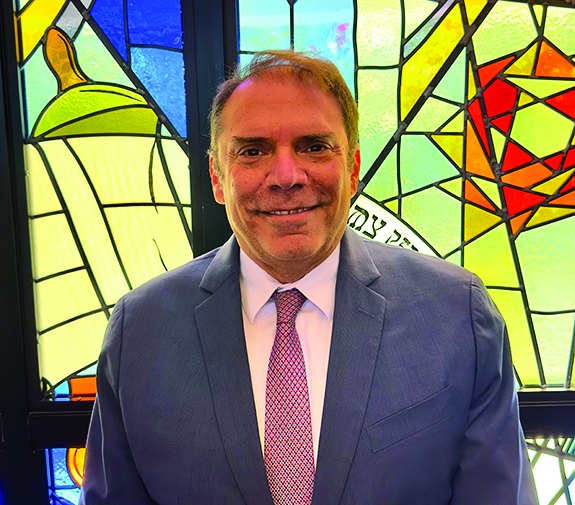
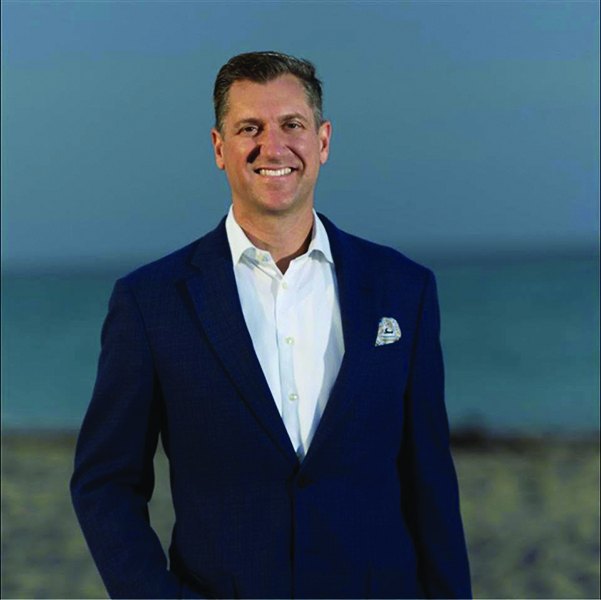
Rabbi Feivel Strauss is the senior rabbi at Tamid Palm Beach.