

Let me start by stating very clearly that my Jewish students, grade three through high school, have totally influenced my biased opinion in this article.
I also want to state that in no way am I a better teacher than anyone else. It’s the way we tackle Jewish issues that differentiates us.
I recently watched a Jewish comedian make a very profound statement. He indicated that outside of day school Jewish education, students who attend Hebrew school in conservative and reform synagogues don’t know any Hebrew once they get out.
This allows me to also make a transition. For the most part when they get out of school, they know very little about Judaism. They certainly know arts and crafts, cooking, what Noah’s ark looks like and all the animals that went into it, and of course preparation for the b’nai mitzvah.
This is being done so that Jewish education is not boring, and we put a lot of fun into it. I suggest, however, that we have failed our students and we have failed our future.
Students who I have taught in conservative synagogues both here in Florida and elsewhere come to class eagerly to learn directly from the same books that are found in synagogue pews on the meaning of the Torah and how it applies to their daily lives, as well as the meaning of prayer. There were no coloring books, plays, singing, prizes, awards, competitions, computers, or anything else. We had straight debates, analysis, conversation, and cognitive thinking as they relate to Judaism. I was never asked to play games or do anything else but study the material.
What was exceptionally gratifying for the students and their families was that many times I would learn that, after class, they would go home and discuss the material with their siblings and parents, and they themselves would get involved in deep discussions.
We covered extensively the history and importance of Israel, the Holocaust, ethics and morality, proverbs, and so many other aspects of Judaism that today most schools have eliminated from their curriculum.
Students were so delighted to be engrossed in our heritage and current lifestyle that, when they were asked if they would like to volunteer to lead services at senior homes three times a year without any community credit, payments, or bribes, 90 percent of them agreed to participate.
As many of these students transitioned to a high school program that mandated two Shabbat services specifically for the class, there was overwhelmingly a rush to volunteer to take both English and Hebrew parts and lead the services. These students will participate more in synagogue life than those whose education evolves around cooking and arts and crafts.
What has been the result of the current educational process being used in a majority of our schools? Very simple: a high rate of dropouts. A Pew organization report indicates that Jewish spirituality and ritual practices are at an all-time low as well as a belief in the value of the Torah. As a matter of fact, there is only one group that attends services on a weekly basis less than the Jews — the atheists!
As the current batch of students grow up and have children of their own, and they have a very elementary knowledge of basic Judaism, how will that transfer to their children?
When did all this start? When I was a parent! It was expected that students would attend Hebrew school three times a week, usually Monday, Wednesday, and Sunday, and their faces should be seen on either Friday night or Saturday morning services.
Parents revolted and said three times a week is too much, we should cut it down to two and shorten the hours. In many cases that is now down to one time a week. This means that parents do have an influence in their children’s education as well as shaping both their future and the generation they will be a part of.
If we have that kind of power, then we should approach our school boards and principals, and — I hesitate to use the word demand but I will — that Jewish education be focused on the basics of Judaism that can be used in everyday life both secular and spiritual.
When our children really know the history of Israel and how important it is to the survival and growth of the Jewish people, they are better able to understand what this magnificent country is going through.
When our children realize that the Torah (and other books) basically has five parts to it and that is the history of the world, how to get along with God, how to get along with ourselves, society and planet earth, they will learn not to make Judaism an interruption of their lives but a part of it.
That is how my students biased me and influenced me to write this article. They got it and they get it!
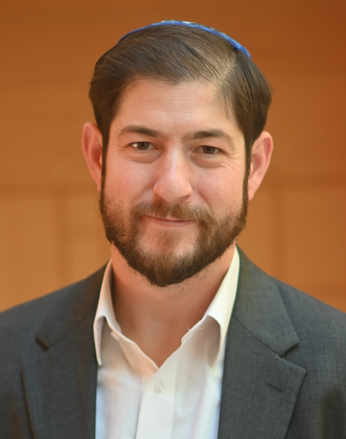
Andy Greenberg is a 25-year Conservative Jewish educator of grades 3-12 and a lecturer for adults of all ages.