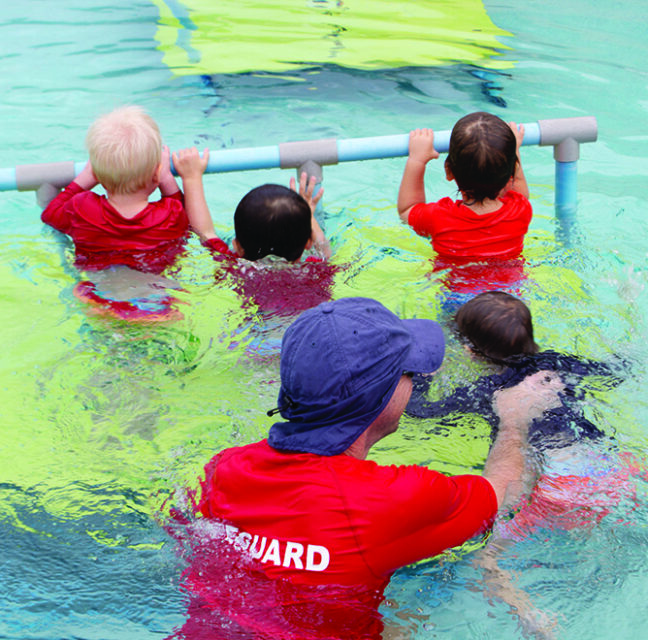



As summer temperatures begin to rise and pools become the go-to spot for family fun, parents may find themselves asking: Is my child ready to start swim lessons?
Swimming is more than a fun childhood pastime, it’s a vital life skill that can provide safety, physical development, and confidence. According to the American Academy of Pediatrics, children can begin learning water survival skills as early as one year old, and formal lessons can significantly reduce the risk of drowning, which remains the leading cause of injury-related death for children ages 1 to 4 in the United States.
So how do you know if your toddler is ready to take the plunge? And why is early swim instruction so crucial? Here’s what experts and instructors at the Mandel Jewish Community Center of the Palm Beaches want you to know.
Top Five Signs Your Toddler Is Ready for Swim Lessons
1. They Enjoy Bath Time and Playing in Water
If your toddler lights up during bath time, splashes in puddles, or shows excitement around sprinklers or splash pads, these are early signs they’re comfortable around water. This familiarity helps reduce fear, laying the groundwork for learning formal swim skills.
2. They’re Curious About the Pool
A child who gravitates toward the pool, asks questions about swimming, or tries to mimic older kids in the water is showing a natural interest that can be nurtured through lessons. Curiosity, when paired with proper instruction, can help children learn quicker and with less resistance.
3. Basic Motor Skills Are Developing
Swimming requires coordination, moving arms and legs together, floating, and holding your breath. If your toddler can walk steadily, climb stairs, or has started hopping and balancing, they’re developing the gross motor skills necessary for basic swim movements.
4. They Can Follow Simple Instructions
Can your child respond to basic instructions like “sit down,” “come here,” or “kick your feet”? This is a key indicator they’re ready to engage in structured swim lessons where they’ll be listening, imitating motions, and responding to instructors.
5. They’re Emotionally Ready
Children who separate well from parents, engage with unfamiliar adults, or show patience in group settings may thrive in a swim class. Emotional readiness ensures they can handle transitions and challenges during the learning process.
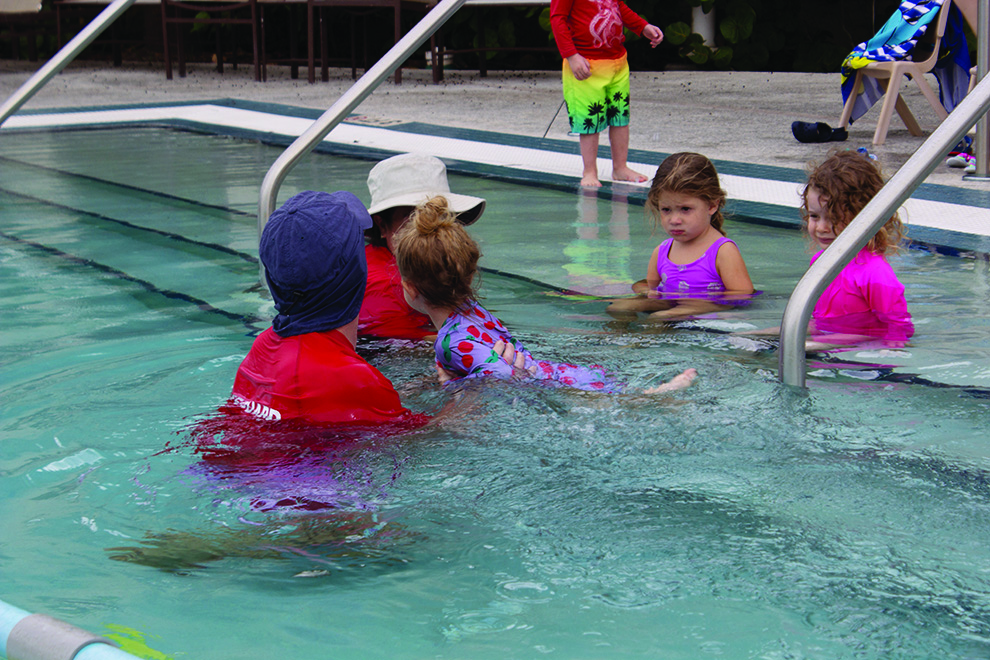
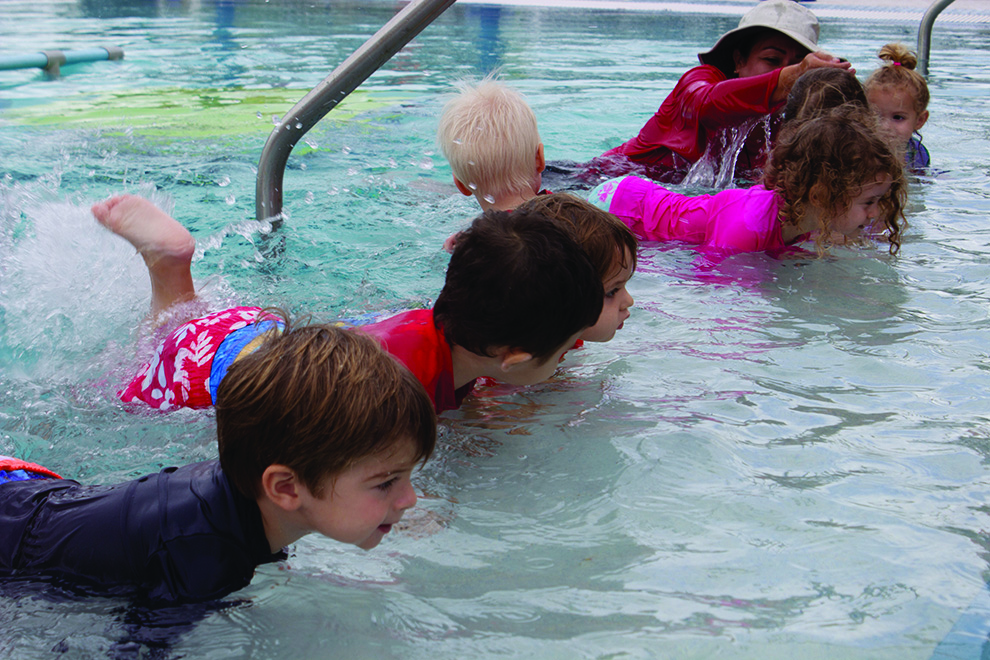


Why Early Swim Instruction Matters
Introducing swim lessons early is more than convenient, it can be lifesaving. The CDC reports that formal swim lessons reduce the risk of drowning by 88 percent in children ages 1 to 4. Beyond safety, early instruction builds a foundation for physical fitness, cognitive development, and social skills.
At the Mandel JCC of the Palm Beaches, instructors emphasize swimming as a lifelong skill. One parent shared, “Enrolling my child in swim lessons at the JCC has been one of the best decisions we’ve made. Not only is my daughter learning a skill that could one day save her life, but I have such peace of mind knowing she’s becoming more confident and safer in the water.”
Different Types of Swim Lessons
Swim instruction is not one-size-fits-all. Depending on your child’s age, comfort level, and swimming ability, different formats may be more appropriate:
• Infant Swimming Resource (ISR) – Typically for babies 6 months to 1 year, ISR focuses on self-rescue techniques like floating and rolling to breathe.
• Survival and Self-Rescue Swim – For toddlers and preschoolers, these classes teach how to float, kick to safety, and get out of the water independently.
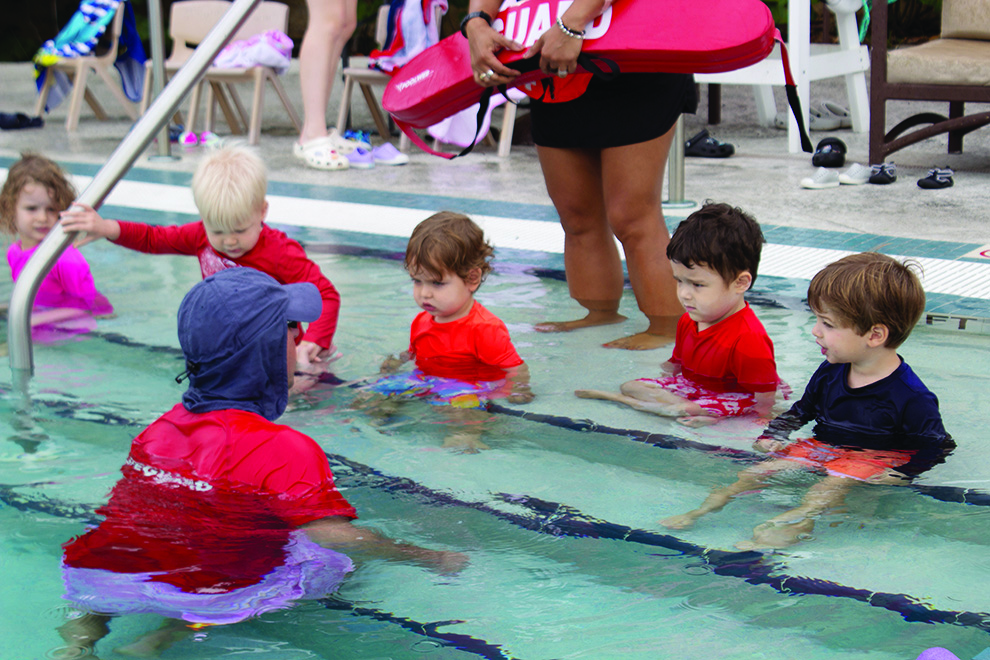
• Basic Lessons – These classes introduce water acclimation, breath control, floating, and kicking, often through play-based learning.
• Advanced Lessons – For older children or those with more experience, advanced lessons focus on stroke development, endurance, and diving.
The Mandel JCC’s JSwim program offers all these formats starting at 6 months old, with group lessons, semi-private lessons, and a private lesson options available Sunday through Thursday.
Practice Makes Progress
Consistency is key when it comes to building swim skills. While the occasional dip in the pool with a parent is enjoyable, it doesn’t replace structured practice.
“It is recommended that children swim at least twice a week,” says a JSwim instructor. “This frequency helps develop endurance and ensures safety habits stick.” Learning in a familiar setting with consistent instructors also builds trust and confidence.
The JCC’s small class sizes, typically five students or fewer, ensure individualized attention and allow instructors to tailor each lesson to the child’s pace and comfort level.
Water Safety Starts with You
While swim lessons play a critical role, parents are the first line of defense when it comes to water safety. Active supervision is essential. That means putting down the phone, avoiding distractions, and staying within arm’s reach, especially for children under 5.
The National Drowning Prevention Alliance offers a sobering reminder: Drowning is often silent. It can happen in seconds.
Here are some key safety reminders for parents:
• Designate a Water Watcher, or an adult whose sole job is to supervise swimmers.
• Install barriers and alarms around pools at home.
• Keep rescue equipment and a phone nearby.
• Enroll in CPR certification.
• Model safe behavior in and around water.
Incorporating these habits into your family’s pool time reinforces the lessons your child is learning and helps them become not only skilled swimmers, but also safe ones.
What the Mandel JCC Offers
The JCC of the Palm Beaches provides a nurturing and safe environment for children to begin their swimming journey. With a heated pool open year-round, JSwim instructors blend structure with encouragement, focusing on skill development and water safety at every stage.
Unlike some swim programs that take a rigid approach, JSwim is built around the child’s readiness. Instructors challenge children while respecting their individual pace. This helps kids develop trust in their instructors and a lifelong passion of swimming.
Whether your child is new to the water or ready for the swim team, JSwim has a class for all swimmer levels. Flexible scheduling, multiple formats, and experienced teachers make it easy for families to find the right fit for their needs.
A Lifesaving Skill, a Lifelong Joy
Teaching your child to swim at an early age is one of the most valuable gifts you can give. It offers safety, confidence, physical development, and a lifetime of fun.
At the Mandel JCC of the Palm Beaches, your child can learn to swim in a supportive, child-centered environment designed to support their needs every stroke of the way. To learn more about registering your child for swim class, visit jcconline.com/aquatics
Lauren Bennett is the aquatics director at the Mandel JCC.