Picture the number of people in a quarter of a packed baseball stadium. Now imagine that many people receiving the same diagnosis in one day. More than 9,500 Americans are diagnosed with skin cancer every day, making it the most common cancer in the country. Tampa General Hospital physicians shared that statistic during a recent community panel, and it is one South Florida residents should take seriously.
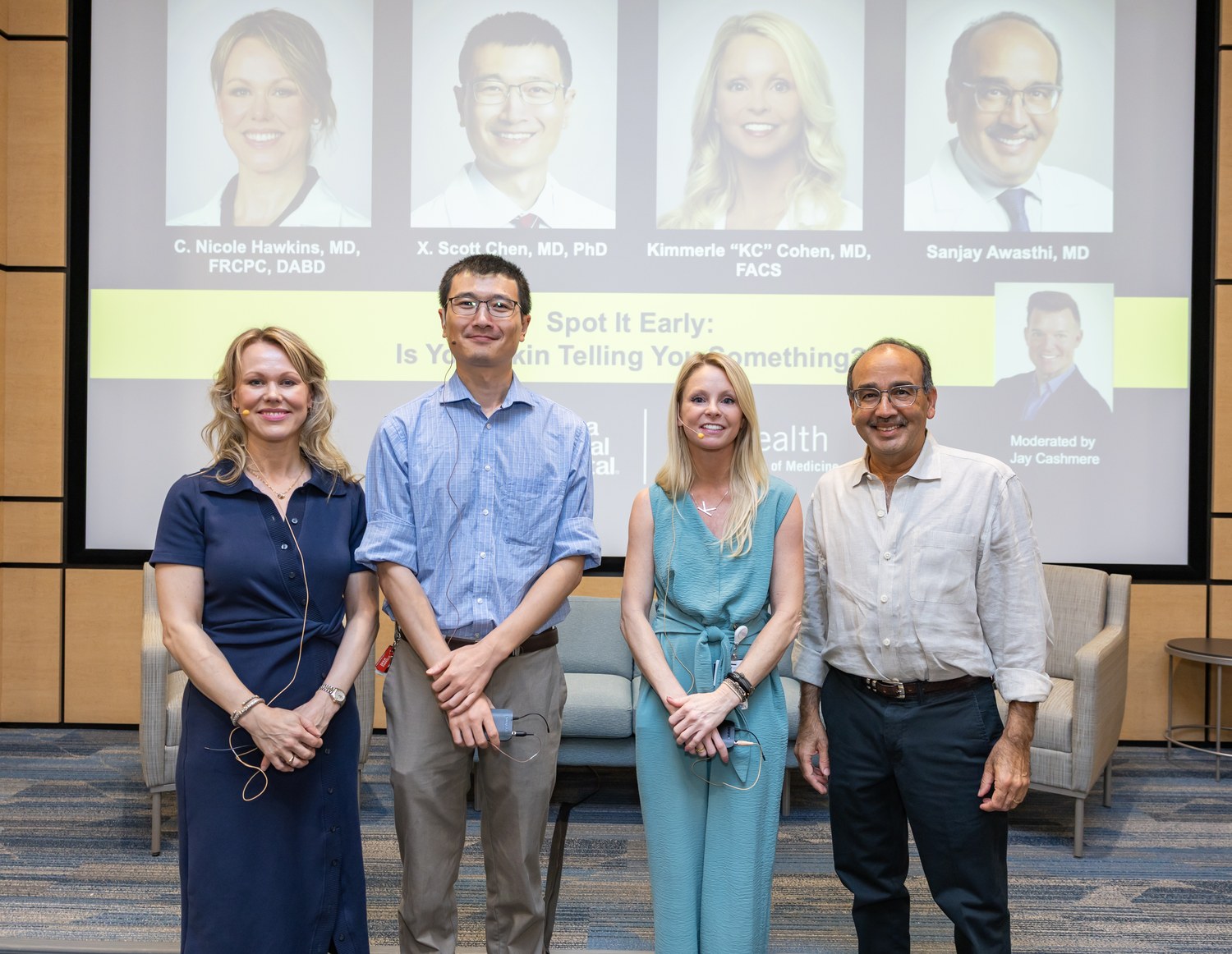
The panel featured Dr. C. Nicole Hawkins of the USF Health Morsani College of Medicine, who specializes in dermatology, and three physicians with the TGH Cancer Institute | Cancer Center of South Florida: Dr. Sanjay Awasthi, a medical oncologist; Dr. X. Scott Chen, a radiation oncologist; and Dr. Kimmerle “KC” Cohen, a surgical oncologist. Together, they explained what people need to know to protect their skin.
Know the three types
Dr. Hawkins explained that basal cell carcinoma is the most common and grows slowly, like “rust on a car.” Squamous cell carcinoma often appears as a tender, scaly spot. Melanoma is rarer but the most dangerous. Warning signs can be identified using the ABCDE checklist: asymmetry, irregular borders, multiple colors, a diameter greater than 6 mm and an evolving mole. When caught early, melanoma is highly treatable. Schedule annual skin checks, conduct monthly self-exams, and apply sunscreen with an SPF of 30 or higher every day, reapplying it every two hours when outdoors.
Surgery with minimal scarring
Dr. Cohen, a two-time skin cancer survivor, said anesthesia and scarring are among patients’ greatest concerns. She prioritizes both the cosmetic results and successfully treating the cancer. “I can cure your cancer,” she tells patients, “But I do not want to leave you with a deformity.” Tumor depth helps determine how much tissue must be removed and whether lymph nodes need to be checked. Reconstructive techniques, including skin grafts, can help even extensive surgical sites heal with minimal visible scarring.
Radiation: faster and gentler
Dr. Chen said he spends many initial visits correcting misconceptions: Patients do not become radioactive and treatment is not painful and does not cause the nausea commonly associated with chemotherapy. A session lasts five to 10 minutes, and a full course of treatment typically takes two to six weeks. Cure rates for basal and squamous cell cancers often rival those of surgery, with generally mild side effects, such as redness and fatigue. He discussed a patient whose basal cell cancer near the eye was treated with radiation instead of surgery, preserving eyelid function and appearance.
Rapid advancement of immunotherapy
Dr. Awasthi has treated melanoma for more than 40 years and remembers when treatment options were far more limited. Today’s drugs are better tolerated, and genetic testing can help physicians identify targeted therapies that may shrink even stage IV tumors. His message to newly diagnosed patients: “With melanoma, you never give up.” Combining surgery, radiation and drug therapy has helped some of his patients with advanced cancer become long-term survivors.
The panel’s overall message was clear: Skin cancer is common, often preventable and highly treatable when caught early. One of the best things you can do this year is schedule a skin check.
For more information about the advanced skin cancer care provided by TGH Cancer Institute | Cancer Center of South Florida, visit CancerCenterofSouthFlorida.com.