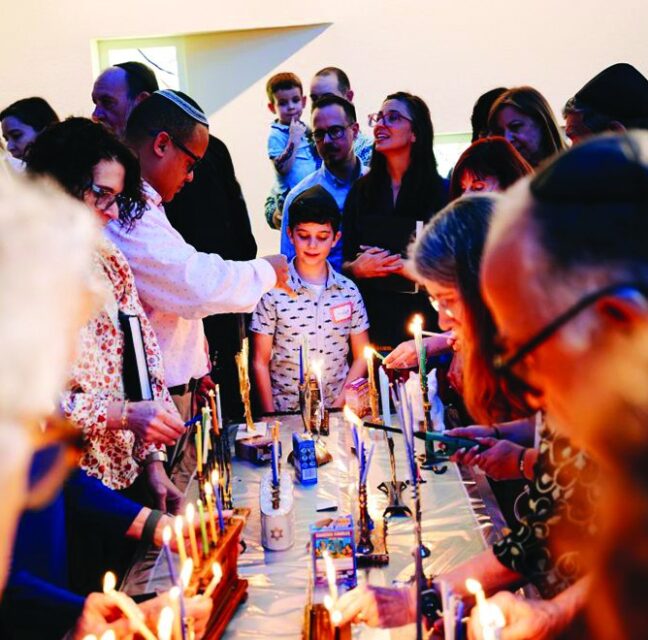
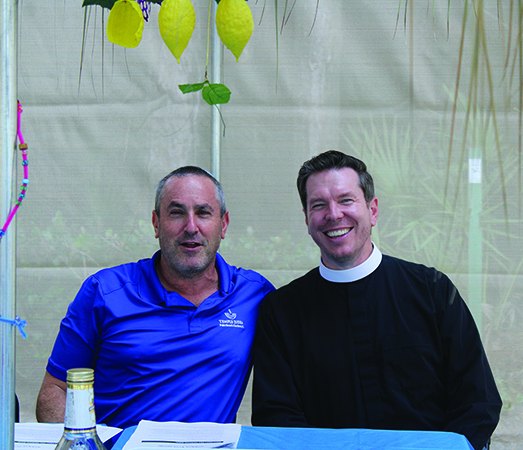
Members of Good Shepherd Church, led by Father Sanford Groff, joined Temple Judea for an interfaith Bible study held in the temple’s sukkah. The session was taught by Rabbi Yaron Kapitulnik, co-senior rabbi of Temple Judea.
The gathering was part of the two congregations’ shared year of study built on “Love your neighbor as yourself” (Leviticus 19:18). Sukkot, the Jewish harvest festival, was a natural fit for the theme. It is a holiday centered on hospitality, open doors, and welcoming guests.
The Biblical Roots of Sukkot
Participants began with the festival’s foundations in the Hebrew Bible:
- Leviticus 23:34 and 39-42 set the holiday on the fifteenth day of the seventh month. It is observed for seven days by dwelling in booths and rejoicing with four species of plants.
- Deuteronomy 16:13-15 commands that the joy of the festival include everyone in the community: family, servants, the Levite, the stranger, the orphan, and the widow.
- Nehemiah 8:14-17 describes the return from exile. The people rediscovered this commandment, gathered branches, and built booths on their rooftops and in their courtyards “with very great rejoicing.”
- Zechariah 14:9-16 looks toward a future day when all nations will go up to Jerusalem to celebrate Sukkot together.
The Mitzvot of the Holiday
Rabbi Kapitulnik explained the central commandments of Sukkot:
- dwelling in the sukkah
- eating meals in the sukkah
- waving the lulav and etrog, the palm branch, myrtle, willow, and citron that together make up the four species
Participants then turned to the sages of the Mishnah and Talmud. The sages ruled that a sukkah must be a temporary dwelling, with a roof of natural materials that lets the sky show through. They also debated whether the booths of the wilderness were actual huts or the protective “clouds of glory” that surrounded the Israelites.

Later Rabbinic Voices
The study continued with later Jewish commentators:
- Rashbam taught that the festival falls at harvest time, when storehouses are full. Leaving one’s home for a fragile booth is a reminder not to grow arrogant in prosperity.
- Maimonides saw Sukkot as a lesson in humility and gratitude, a way to remember hard times during times of plenty.
- The Zohar calls the sukkah “the shade of faith.” It also introduces the tradition of ushpizin, welcoming spiritual guests into the sukkah each night.
- The Vilna Gaon connected the holiday’s timing to the return of the clouds of glory after Yom Kippur.
Sukkot in the Christian Scriptures
Father Groff and Rabbi Kapitulnik also explored where Sukkot appears in the Christian scriptures:
- John 7 places Jesus in Jerusalem for the Feast of Tabernacles, speaking of “living water” on the festival’s last day.
- Matthew 17, the Transfiguration, has Peter offering to build three booths.
- Palm Sunday has crowds waving branches and crying “Hosanna.” The cry echoes the Hoshana prayers (“Save us, please”) that Jews recite while circling with the lulav on Sukkot.
The study ended with the discussion that drew the group together in the first place: what it means to open one’s home and heart to a neighbor. Sitting together under the open roof of the sukkah, members of both congregations saw that the ancient call to welcome the stranger still has much to teach.